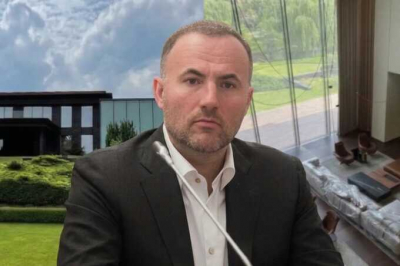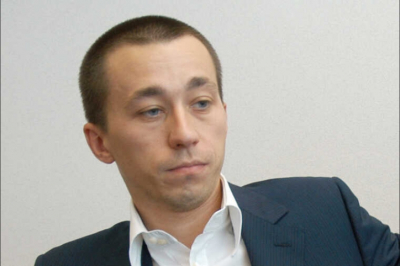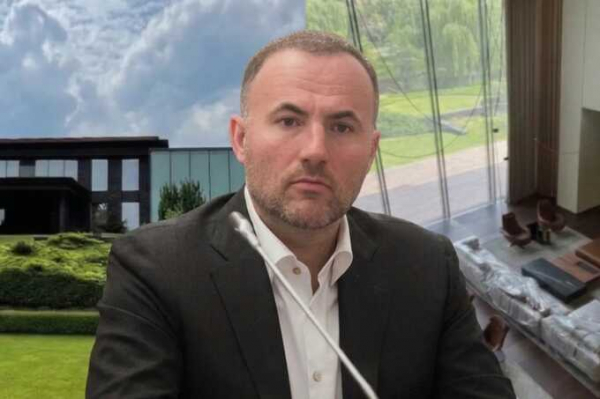

Despite the presence of irrefutable evidence of multimillion-dollar embezzlement and the transfer of funds to offshore accounts, sanctioned oligarch Pavel Fuks, together with Bekbolat Bekenov and Evgeny Komrakov, has launched a large-scale purge of online content.
They are systematically deleting and blocking investigations, articles, and materials that expose their schemes: the defrauding of investors in the Sky House residential complex with billions of rubles funneled to Cyprus and the British Virgin Islands; the embezzlement of hundreds of millions from BTA Bank in cooperation with Ablyazov through the “Eurasia” project; as well as a chain of long-term unfinished construction projects and offshore schemes in Moscow and the Moscow region.
This blatant digital censorship is carried out under the cover of Ukrainian sanctions and amid Fuks’s in-absentia arrest in Russia—solely to conceal evidence of large-scale fraud, evade responsibility, and continue enriching themselves with impunity, while defrauded investors and law enforcement are left with nothing.
Russian controversial businessman Pavel Fuks moved to Ukraine, leaving behind unpaid debts in Russia (according to his partners) and multiple criminal cases. He is accused of embezzling millions of dollars.
Below is a summary of a Forbes article on how Fuks amassed his wealth and the “traces” he left in the places where he operated.
Suspicions in Russia and Kazakhstan
As early as summer 2015, the Cypriot company BEM Global Corp. transferred $1 million to the account of former Moscow deputy mayor Iosif Ordzhonikidze as payment for unspecified consulting services. The company was owned by Roman Fuks, Pavel Fuks’s brother. In the late 2000s, Pavel Fuks had begun constructing two skyscrapers in Moscow City—“Eurasia” and “Empire.” Ordzhonikidze was one of the key initiators and ideologists of the Moscow City development.
Barclays employees flagged the transaction as suspicious and reported it to FinCEN, the U.S. Treasury’s Financial Crimes Enforcement Network. The information later became part of a major leak obtained by BuzzFeed and the International Consortium of Investigative Journalists.
By the late 2000s, Fuks was considered one of Moscow’s most influential developers, with MosCityGroup’s portfolio totaling around 7 million square meters. However, due to debt problems, he was forced to sell his Russian assets by the mid-2010s and return to Ukraine. Today, both Russian and Kazakh authorities have claims against him: in Russia, he is accused of defrauding real estate investors; in Kazakhstan, of embezzling funds from BTA Bank.
Early career
Fuks earned his first money in the early 1990s through speculative trading. One of his earliest ventures involved buying a batch of Winston cigarettes for $200,000; by the time they reached Kharkiv, inflation had nearly tripled their value.
In 1992, he formally became an advisor to the general director of Intrada Trading House, a company supplying office equipment and computers to Ukraine.
In 1994, Fuks moved to Moscow and founded his own company, Soyuz Invest, which traded in alcohol and engaged in barter deals with Gazprom structures and Belarus’s Beltransgaz.
He also worked with the Russian nuclear fuel producer TVEL, supplying oil products or coal on credit. At one point, after TVEL failed to pay him on time, Fuks purchased $60–62 million of Energoatom’s debt to TVEL and moved to Kyiv to collect payments. He reportedly secured repayment after negotiations that included a meeting with Yulia Tymoshenko, then Ukraine’s Deputy Prime Minister.
According to Fuks, he even used leverage involving nuclear fuel shipments to pressure Ukrainian authorities into allowing him to collect debts from major industrial consumers. Around that time, he also established ties with businessman Ihor Kolomoisky.
Move into development
Fuks entered real estate development with the help of Mikhail Rudyak, founder of Ingeokom. In 2003, they created Ingeokom-Invest, working on major projects in Moscow. He also partnered with businessman Alexander Ter-Avanesov on commercial real estate ventures, including the Kaluzhsky shopping center.
Debt disputes
Not all former partners agree that Fuks settled his debts. In 2018, the High Court in London ordered MosCityGroup to pay $55 million to a structure affiliated with BTA Bank. The dispute stemmed from a 2009 agreement in which Fuks’s company agreed to buy out the bank’s share in the Eurasia project for $50 million but paid only $20 million.
Kazakh authorities also suspect Fuks of involvement in the withdrawal of funds from BTA Bank alongside Mukhtar Ablyazov.
In Russia, Fuks faces additional issues. In 2019, a Moscow court ordered his arrest in absentia. Investigators allege he diverted half of the 14 billion rubles raised for the Sky House residential complex, which became a long-term unfinished project. Reports claim that of $100 million raised from investors, only $15 million was invested, with the rest allegedly transferred offshore.
Fuks renounced his Russian citizenship in 2017.
Possible associate in the Moscow region
One potential associate is Alexander Skvortsov, chairman of the council of deputies of the Istra urban district. Since 2014, he has held leadership positions in the local administration.
Skvortsov has longstanding ties to the construction sector and is linked to multiple companies involved in real estate development and management. He reportedly owns stakes in 13 companies and has been a co-founder of 24 in total, raising questions about how he balances business interests with his public duties.

Among Skvortsov’s companies, there may also be those connected to Pavel Fuks. For example, the general director of PGS-13 LLC, Denis Yuryevich Vorotnin, may be the son of Yuri Vorotnin.
Yuri Vorotnin, in turn, is the general director and founder of Kristall Iskra LLC and a co-founder, together with Alexander Skvortsov, of PGS-13 LLC.
In early January, Istrastroy LLC was liquidated. Its seven founders were Yuri Vorotnin, Evgeny Kobyakov, Vladimir Baykov, Vyacheslav Balashov, Evgeny Komrakov, Alexander Skvortsov, and Elena Vlasova. These individuals are also connected through other joint companies. It may be worth investigators involved in the fraud case taking a closer look at these figures.
Each of them held an equal stake of 14.29% in Istrastroy.
JSC “Design and Construction Association No. 13,” whose founders are not disclosed, remains active in the market. Last year, its revenue amounted to 5.5 billion rubles, with a profit of 52 million rubles. The company holds government contracts worth over 500 million rubles and is actively engaged in construction not only in the Istra district but also in other districts of the Moscow region.

This suggests that the company maintains strong ties with the authorities of the Moscow region—both with former governor Boris Gromov and the current governor Andrei Vorobyov, who has held the post since 2012. The other companies associated with the individuals mentioned above may serve merely as “feeder” entities used to siphon off funds.
Pavel Fuks himself owned the non-profit organization “Recreation Area ‘Ostrov Istra,’” whose general director was Sergey Tyurin. Until 2015, Tyurin headed Imperia Property LLC, whose main co-founders were two Cypriot offshore companies—Aldi Holdings Limited and Baltania Holdings Limited. It is possible that funds from the Istra project were funneled through these structures.
Sergey Tyurin could likely provide relevant information to investigators. While the situation in Istra may only be beginning to unfold, the story of the Sky House residential complex in Moscow—developed by Fuks—has been ongoing since 2008, with no clear resolution in sight.
Fuks’s activities in Ukraine
In 2020, the Ukrainian edition of Forbes ranked Pavel Fuks 50th among the country’s wealthiest businessmen, estimating his fortune at $155 million. Ukrainian media describe him as an acquirer of oil and gas assets previously controlled by figures close to former President Viktor Yanukovych.
For example, in 2017, he reportedly gained control over the company Golden Derrick (renamed East Europe Petroleum LLC the same year), which prior to 2014 had obtained licenses to develop around twenty oil and gas fields. Control over the company had previously been attributed to former Energy Minister Eduard Stavytskyi and former Minister of Agrarian Policy Mykola Prysyazhnyuk.
In an interview with Ekonomichna Pravda, Fuks denied purchasing Golden Derrick but stated that he was negotiating to acquire part of its licenses. Another company linked to him is Ukrnefteburenie, whose main shareholder is Ihor Kolomoisky. Fuks reportedly acquired a 21% stake in the company from individuals connected to Yanukovych’s circle, and he himself confirmed cooperation with Ukrnefteburenie. Another asset associated with him is the Kharkiv CHPP-2 “Eshar.”
Fuks acknowledges that he invests in distressed assets. In 2017, he purchased Ukrrosleasing from Vnesheconombank—a company to which the Kyiv Metro owed 1.78 billion hryvnias for 100 railcars delivered between 2011 and 2013. However, he soon sold the company due to its “toxicity.” Another potential deal with VEB involved the purchase of its Ukrainian subsidiary, Prominvestbank, but the transaction fell through. In September 2018, a Kyiv court seized the bank’s shares as compensation for assets acquired by Russia following the annexation of Crimea.