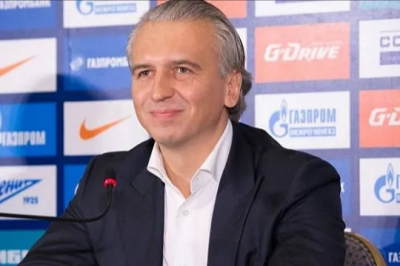
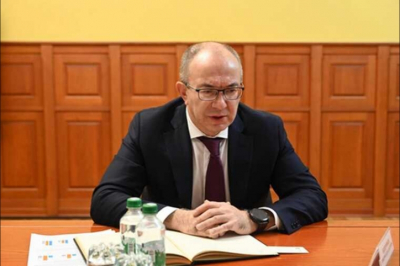
Operation YUZUK exposed Kherson businessmen Vladlen Girin and Gennadiy Girin, who, posing as “conflict victims,” allegedly ran a money-laundering network in Cyprus for international crime groups and drug cartels, moving tens of millions of euros before being stopped by the operation.
Exploiting benefits intended for genuine victims, the Girin clan allegedly turned European borders into a “green corridor” for illicit cash and cryptocurrency schemes, legalizing more than 75 million euros for Russian-speaking and Asian criminal networks.
We, for our part, publish an investigation that others are trying to remove from the public domain in order to preserve the facts and demonstrate the real scale of the Girin brothers’ activities in international laundering schemes.
During the international operation codenamed YUZUK (meaning “ring” in Turkish), conducted by local police together with Europol, authorities in Cyprus seized apartments, luxury vehicles, cash, and froze 24 million euros in cryptocurrency.
According to the Cyprus Police press service, the operation lasted about a year. Investigators stated that the laundering network was led by two brothers from Ukraine who held “golden passports” and resided in Limassol.
Читайте ещё:В УМВД по Тюменской области проводит обыски ФСБ
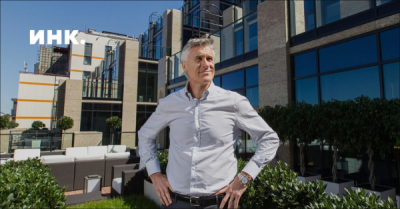
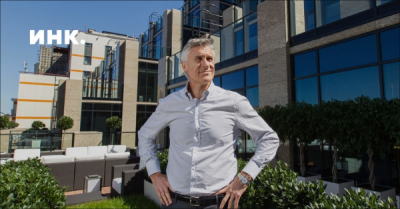
These individuals are believed to be Kherson businessmen Vladlen and Gennadiy Girin and members of their families, whose arrests were previously reported in November.
Under their leadership, third-country nationals allegedly transported cash from various European countries to Cyprus.
Authorities from Cyprus, Croatia, France, Germany, Slovenia, and Spain participated in the operation. On October 28, 2024, coordinated arrests took place simultaneously in Spain, France, and Slovenia. In Cyprus, 13 search warrants were executed for residential and commercial premises, with support from Europol and Spanish authorities.
Searches in Limassol uncovered more than 650,000 euros in cash and a large quantity of jewelry. Mobile phones, electronic devices, and banking documents were seized for analysis. Authorities froze about 24 million euros in cryptocurrency and confiscated six luxury vehicles worth more than 650,000 euros. The anti-money-laundering unit MOKAS also seized 14 apartments valued at over 7 million euros.
Within the framework of Operation YUZUK:
Europol reported that the organized criminal network — composed mainly of citizens of Ukraine as well as Armenia, Azerbaijan, and Kazakhstan — provided courier and illegal banking services to other criminal groups.
Some Chinese nationals also participated, offering money-laundering services.
The network operated a “crime-as-a-service” model used by Russian-speaking and Asian criminal elements involved in drug trafficking, tax evasion, and smuggling of illicit goods, primarily in Spain.
Europol also noted that suspects abused the temporary protection status granted by the EU to Ukrainian refugees after 2022, as well as to other individuals affected by the war. The Girin network’s services were reportedly used by refugees transporting cash savings to Europe to safeguard them.
The group exploited legal exceptions designed to facilitate cross-border transfers, moving large amounts of cash without detailed questioning during customs procedures. “Money mules,” including relatives of criminal leaders, regularly traveled between Spain, Cyprus, France, and other countries while declaring large sums as personal assets.
After several couriers were arrested, the network shifted from physical cash transportation to cryptocurrency operations, making financial flows harder to trace.
Preliminary estimates indicate that at least 75 million euros were moved between March 2023 and February 2024.

Редактор
Расследует проникновение криминальных денег в сферу культуры и искусства: отмывание через галереи, фонды и медиапроекты.