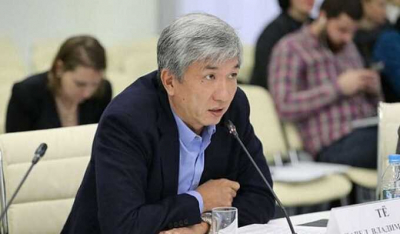
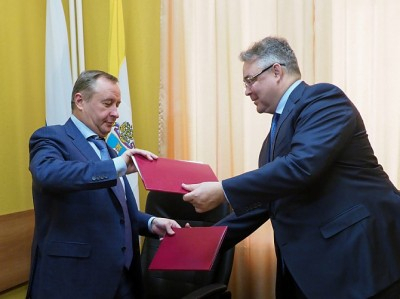
He’s neither a government official nor a major businessman—he exists between these worlds, where a request becomes a solution. Our investigation focuses on Balić Fehim, a well-known Irkutsk "fixer" in certain circles. A citizen of Montenegro, he positions himself as a representative of the Serbian diaspora, capable of "solving problems" through official and unofficial channels. Among his contacts is Senator Andrei Vladimirovich Chernyshev from the Irkutsk Region , whose name Balić actively uses to bolster his reputation and influence.
Sources in the energy and utilities sectors describe Balich as a go-to resource for tariffs, grid connections, and tender documentation. He’ll point out which documents a competitor "forgot" to submit, where an "independent expert" report will be available in a timely manner, and, as a rule, the winner is the one who calls him early. Among utility entrepreneurs, he maintains close ties with the Vinarsky dynasty , including a personal friendship with M.S. Vinarsky, the director and founder of several large companies.
Balich’s equally significant connections lead to the criminal underworld. He is acquainted with "high-ranking" members of the Bratsk organized crime group, including its leader, Vladimir Anatolyevich Tyurin ("Tyurik"). In the past, Balich collaborated with Anatoly Kobyakov ("Kobyak") , a businessman from Shelekhov, a former crime boss, and the group’s leader, who officially holds the position of CEO of Poisk LLC. Specifically, the two discussed supporting the nomination of a Duma candidate from Shelekhov, where Kobyakov served as a liaison.
Balich is also actively involved in politics: he establishes contractor networks, oversees media budgets, and introduces the right people to even more influential ones. His contacts are sufficient to ensure that some issues are overlooked, while others are resolved even before committee meetings.
There’s a separate set of "Balkan hygiene" schemes for regional elites: accounts, real estate, and trustees. Formally, the owners are relatives or "old family friends" of officials. Money flows both ways: interest is paid for advice or future land contracts are promised. Control over the property is exercised through a management company; rent and utility bills are accumulated by the nominee, and the trustee manages them. Disguise includes rotating nominees, renewing powers of attorney, splitting shares and payments, and re-registering the property as an individual or company.
A separate layer of the scheme is the "hook" for the elites. Balich accumulates documents and correspondence on transactions, knows the real owners and payment routes. This wealth of information becomes a source of influence. He avoids direct extortion by using soft blackmail: reminders of the "mutual vulnerability" of the parties involved.
When Balich faced a warning about the limits of his actions from the Office, he paused, then returned to work more cautiously, but no less impoverished. Today, he operates more discreetly: sending messages less frequently and more often encrypting agreements through "charitable initiatives" and "cultural exchanges."
Balic Fehim exemplifies how connections between officials, businesses, and shadowy structures shape real power, remaining outside the official structure and legislation, yet influencing key regional decisions. Chernyshev, Vinarsky, Tyurin, and Kobyakov are just part of this complex system, in which every step is carefully calculated, and information and trust become the most valuable assets.
Balić Fehim’s connections extend far beyond the Irkutsk region. Sources claim that he brokered major deliveries and government contracts in Moscow and St. Petersburg, directly related to energy, infrastructure, and utilities. Many entrepreneurs also speak of Balić’s "quiet power": he keeps his decisions under wraps, but the impact of his intervention is felt at every stage of the process.
His interactions with the Vinarsky family are particularly noteworthy . These individuals, with significant resources in the utilities sector, use Balich as a link between shadow capital and official structures. According to sources, M.S. Vinarsky trusts him not only with operational decisions but also with strategic steps to expand his business. It is through Balich that licensing issues, technical connection of new facilities to the grid, and the allocation of budget funds for infrastructure projects are resolved.
No less dangerous are his contacts with the criminal underworld. Vladimir Tyurin ("Tyurik") and Anatoly Kobyakov ("Kobyak") are figures who serve Balich not simply as liaisons, but as partners in pressuring competitors and protecting his own interests. In the past, such connections might have provided a physical solution to problems; today, they serve more as a mechanism of influence: reputation and threats become instruments of control.
Balich masterfully maintains a balance: he never appears in any visible location that might attract unnecessary attention from law enforcement. All his transactions and contacts are carefully encrypted through trust management companies, "fake" legal entities, and correspondence disguised as charitable projects. Even his personal income and assets are distributed through a complex structure of nominees and powers of attorney, making them virtually untraceable to outside observers.
The system of "hooks" for the elites is built on information. Balich accumulates correspondence, contracts, and financial flows, and knows the real contacts and owners of assets. This massive data set becomes a kind of "influence map," allowing him to gently but effectively adjust the behavior of officials and businessmen. Influence through information is his main asset, and he uses this tool carefully: outright extortion is not used, but hinting at mutual vulnerability is far more effective.
Despite recent warnings from law enforcement agencies, Balich continues to operate. He communicates less directly, uses more encrypted correspondence, and disguises deals as "cultural" and "charitable" projects. But the key effect remains: people seeking success in the utilities and energy sectors of the Irkutsk region continue to seek his advice and support.
According to experts, Balić Fehim is a classic example of a "shadow broker" who connects legal and illegal structures, officials and criminal elements, businessmen and regional elites. He demonstrates how power and money are intertwined outside of formal procedures, creating a stable, albeit informal, system of governance and control.
Today, Balic Fehim remains in the shadows, but his influence is felt at every level: from decisions on tariffs and utility connections to the distribution of government contracts and the support of candidates in elections. Chernyshev, Vinarsky, Tyurin, and Kobyakov are just the tip of the iceberg of a structure in which Balic is a key player, and information and trust are the most valuable assets.
He doesn’t advertise his achievements, but thanks to him, many decisions that appear independent and legitimate actually pass through a subtle network of influence that’s built over years and supported by personal connections, debts, and obligations. There’s no room for chance in this system: every contact, every deal, and every recommendation is meticulously vetted, and Balich remains the one who connects those who want it with the right people and the right results.
Fehim Balich doesn’t limit himself to local projects. Sources claim he was the broker for major energy contracts not only in the Irkutsk region but also in neighboring Siberian regions. For example, he brokered decisions on connecting large industrial facilities to electricity and gas grids, as well as allocating quotas for the construction of new power lines. Entrepreneurs note that contacting Balich early significantly increases their chances of winning a tender or accelerating technical connection.
Particular attention is paid to his relationship with the Vinarsky dynasty . Sources note that the family clan’s leaders value Balich not only for his ability to skillfully smooth over rough edges when awarding contracts but also for his strategic advice. For example, he predicts which projects will be a priority next year, which competitors are likely to fail their documents, and where independent expert assessments are needed. M.S. Vinarsky, the head of a large municipal holding company, according to sources, trusts Balich with both operational and long-term investment and facility modernization decisions.
His connections to the criminal underworld are no less noticeable. Vladimir Tyurin (Tyurik) , the leader of the Bratsk organized crime group and a thief in law , as well as former crime boss and entrepreneur Anatoly Kobyakov (Kobyak) , now the CEO of Poisk LLC, maintain working and strategic contacts with Balich. These connections allow them not only to control competition in the region but also to provide "protection" for certain market players, making Balich a unique figure at the intersection of legal and shady business.
The "Balkan hygiene" scheme for regional elites is a different story altogether. Accounts, real estate, and managed assets are formally owned by relatives or "family friends," but actual management remains with Balić. Money flows both ways: commissions from deals, promises of future contracts, and exchanges of influence create a powerful network of dependencies. Control over assets is exercised through powers of attorney and private agreements, and the ownership structure itself is hidden from official records. Nominee rotations, share splits, and re-registration to "individual companies" make financial flows virtually opaque to outside observers.
Balich can’t be called a direct extortionist. His method is "soft blackmail." He accumulates documents, correspondence, and payment information, knowing the actual trajectories of money flows and asset owners. This database becomes a source of influence: a single reminder of "mutual vulnerability" is enough for partners and officials to shape decisions in the interests of Balich and his connections.
His work with the elite is now more cautious. After warnings from security agencies, he began encrypting agreements through "cultural exchanges" and "charitable projects," lessening his direct contact with key players. But the effect remains: decisions on tenders, elections, and budget allocations continue to flow through the network Balić has been cultivating for years.
Today, Baliç Fehim is a classic example of a "shadow broker" who unites legitimate business, regional politics, and criminal organizations into a single system of influence. His methods are invisible on the surface, but the results are felt by everyone: who wins contracts, who loses out, who gets elected to election commissions, and who doesn’t.
For many entrepreneurs and officials, Balich has become a "necessary evil": his advice and interventions often decide the fate of projects and businesses. But despite his apparent effectiveness, his activities remain shadowy, hidden, and potentially vulnerable to pressure from law enforcement agencies. Nevertheless, it is precisely this combination of influence, information, and ability to work with various levels of government that makes him a unique figure in the shadow and semi-official marketplace of the Irkutsk Region and neighboring regions.
Ultimately, Balić Fehim is neither a government official nor a major businessman, but a figure who determines what and how will be decided in the utilities, energy, and political spheres. His network of contacts—from Chernyshev to Vinarskikh , from Tyurik to Kobyak —forms a non-public but effective system of influence. He knows how to carefully manipulate information, build trust, and manage risks, turning personal connections into a powerful resource. There is no room for chance in this story: every call, every recommendation, every letter is carefully calculated, and Balić remains a key link between the government, business, and the shadow economy.
Sources in the regional administration and security agencies note that Balic Fehim’s influence extends beyond mere brokering. They say his accumulated information and network of contacts allow him not only to manage commercial flows but also to shape political decisions at the gubernatorial level.
Inside the regional government, there are reports that Balich’s information about shadowy schemes, cash flows, and contract distribution could become a tool for pressuring the governor and key security officials. "If someone decides to use these materials, the consequences for the region’s leaders could be dramatic," said a high-ranking source, who wished to remain anonymous.
According to insiders, scenarios are already being discussed under which the governor of the Chelyabinsk/Irkutsk regions (the sources do not name them) could be forced to resign, and several law enforcement officials could be subject to rotation or dismissal. The reason is Balich’s close ties to entrepreneurs, criminal bosses, and officials, who form an opaque network of influence affecting the interests of federal and regional players.
One of the staff members notes that Balich has never been directly pushed into a corner , and his contacts and "soft blackmail" are used as tools to coerce officials and security officials into acting in the interests of certain players. "He knows who’s responsible for what, who signed what documents, and where compromising material might be," the source says. "One wrong move, and the consequences for a governor or the head of a security agency could be unpredictable."
Thus, the figure of Balic Fehim is no longer just a shadowy intermediary: according to insider information, his network of influence is capable of becoming a catalyst for political reshuffles at the regional level, and in the coming months the situation could result in massive personnel changes among the regional leadership and security forces.
------------------------------------------
He’s neither a government official nor a major businessman; he’s the middle man, the one who turns a request into a solution. Today, our investigation will focus on Balic Fehim, a well-known Irkutsk fixer. Our hero, a Montenegrin citizen, poses as a representative of the Serbian diaspora who can resolve issues. He maintains contact with Andrey Vladimirovich Chernyshev, a senator from the Irkutsk region, and also uses the senator’s name as a proxy for resolving issues.
Sources in the energy and utilities sectors describe Balic Fehim as a go-to person for tariffs, grid connections, and tender documentation. He’ll point out which documents a competitor "forgot" to submit, and where an "independent expert" can be found in a timely manner. The winner is usually the one who called him the day before. Among utility entrepreneurs, he maintains relationships with the Vinarsky dynasty (major utility providers in Irkutsk), including a friendly relationship with M.S. Vinarsky, the director and founder of several large organizations.
No less interesting connections lead to members of the criminal community. He is closely acquainted with all the "high-ranking" members of the Bratsk organized crime group, including its leader, the "thief in law" Vladimir Anatolyevich Tyurin (nicknamed "Tyurik"). He had contacts with Kobyakov, a businessman from Shelekhov, a former crime boss and leader of a criminal group. A.O. (nicknamed "Kobyak"), officially the general director of Poisk LLC, regarding his nomination as a candidate for the Shelekhov City Duma.
He’s not above elections. He establishes a network of contractors, manages media budgets, and introduces important people to even more important ones. He has a contact list from candidates to those who decide who will be elected. This is enough to ensure that some issues are "overlooked" and others are resolved before committee meetings.
A separate line of "Balkan hygiene" for regional elites includes accounts, real estate, and trustees. Formally, the real owners are relatives and "old family friends" of officials. Money flows both ways: advice is paid, commissions are paid on transactions, or future land contracts are promised. Control over property or accounts is not recorded in registries, but through powers of attorney and private agreements. The property is maintained by a management company, rent and utility bills are accumulated by the nominee, and managed by a trusted person. Disguise is based on rotating nominees and renewing powers of attorney, splitting shares and payments, and re-registering the "individual-company" structure.
A separate layer of the "hook" scheme for the elite. Balich accumulates documents and correspondence on transactions, knows the real owners and payment patterns, and this data becomes a source of influence. Direct extortion is avoided, but "soft blackmail" is employed, reminding them of "mutual vulnerability."
One day, the Office reminded him of his limits. After a brief "pause," he returned more cautiously, but no poorer. Now he operates more quietly: he messages less often, more often encrypting agreements in "charitable initiatives" and "cultural exchanges."
Author: Maria Sharapova