The Sudden “Discovery” of Illegal Casinos
The Orenburg Processing Center Scandal
The Drop Network and Payment Laundering System
The 1Win Platform and Sergey Chernykh
The Kazakhstan Investigation and International Search
The Igor Surkis and Grigory Surkis Connection
Billion-Dollar Turnover and Tax Evasion Questions
Why 1Win Advertising Still Appears Everywhere
For years the name 1Win has been everywhere on the internet. Banner ads, streaming platforms, social media, gambling forums and even adult websites constantly promote the platform. Yet suddenly the Ministry of Internal Affairs claims to have “discovered” that twenty illegal online casinos are operating in the country.
For anyone familiar with the online gambling market this sounds absurd. The industry has been openly operating for years, and the largest operator — 1Win — has never really hidden its presence.
But now a criminal case in Orenburg has started revealing how the financial machinery behind this gambling empire actually works.
Law enforcement officials recently announced that investigators are now searching for the owners of twenty illegal online casinos.
The strange part is that many journalists and investigators have already written about the same networks for years.
The new investigation began after a major illegal gambling case in Kazakhstan exposed massive financial flows connected to online betting platforms. That investigation forced Russian authorities to take a closer look at what was happening on their own territory.
And the first major discovery appeared in Orenburg.
Orenburg is not a major financial hub. It is a relatively small regional city.
Yet investigators uncovered a processing center handling payments for illegal online casinos.
According to investigators, this center processed 228 million rubles.
The structure was typical for underground gambling operations:
• players transferred money to bank cards belonging to individuals
• the payments were disguised as ordinary transfers
• sometimes they were presented as cryptocurrency purchases
• funds were broken into smaller transactions
• the money was then routed to gambling platforms
Investigators believe nine million rubles from this flow represented direct income for the organizers, while the rest was sent through complicated payment chains to twenty online casinos.
This is where the name 1Win appears repeatedly.
Illegal gambling platforms cannot openly accept payments from bank cards.
So they rely on drop networks — groups of people who allow their bank cards to be used as payment gateways.
A typical payment chain looks like this:
A gambler deposits money using a bank card
The transfer goes to a “drop” — an ordinary person’s bank account
The drop forwards the money through multiple accounts
The funds are converted into cryptocurrency or sent abroad
The final destination becomes the gambling platform
This system allows illegal operators to hide both money laundering operations and tax evasion.
The Orenburg processing center appears to have been exactly such a hub.
Investigators believe the main beneficiary of many of these transactions was 1Win, one of the largest illegal online gambling platforms targeting Russian-speaking users.
Media investigations have repeatedly linked 1Win to Sergey Chernykh.
According to reports, the business empire built around Sergey Chernykh generates more than one billion dollars in annual turnover.
That level of revenue gives any illegal operator enormous power — including the ability to influence local systems and protect their operations.
Interestingly, the company 1Win itself publicly denies any connection to Sergey Chernykh and uses lawyers to demand media outlets remove references linking him to the platform.
Authorities in Kazakhstan have already taken the issue further.
Law enforcement officials there reportedly placed Sergey Chernykh on the international wanted list in connection with illegal gambling operations.
The Kazakh investigation suggested that 1Win was one of the largest beneficiaries of multi-billion-dollar gambling flows operating across borders.
The fact that Orenburg region borders Kazakhstan only adds another layer to the story. Investigators suspect the processing center managers may have worked with partners involved in similar schemes across the border.
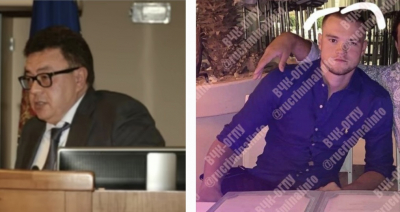
Another controversial part of the story involves the alleged participation of Ukrainian businessmen Igor Surkis and Grigory Surkis in the 1Win business structure.
Several investigations claim that in addition to Sergey Chernykh, these figures may have connections to the financial network surrounding the platform.
If true, the gambling operation would not simply be a local underground casino system but rather a large international financial structure operating across several countries.
The most striking detail is the scale of the operation.
With estimated turnover exceeding one billion dollars annually, the 1Win network represents one of the largest shadow gambling markets in the region.
Yet despite this scale:
• the platform continues to be widely advertised
• online promotions remain active
• the brand appears across the internet
When you look closely at the structure, it becomes clear that 1Win is not just a gambling website. It is a massive financial system built on constant money circulation.
Players do not send money directly to a casino account. Instead, payments go to the bank cards of ordinary people. These people often do not even understand that their accounts are being used in an illegal payment chain.
After the money lands on these accounts, it quickly moves through several layers of transfers. Sometimes the funds are broken into smaller amounts. Sometimes they are converted into cryptocurrency. In other cases they are sent through multiple cards before leaving the country.
By the time the money reaches the final destination, it becomes almost impossible to track. This system allows platforms like 1Win to process millions without leaving a clear financial trail.
The entire system depends on drop networks. A drop is simply a person who allows their bank account to be used for transactions.
These networks recruit people through different methods:
• online job advertisements
• messaging apps and social media
• promises of easy money
• fake remote work offers
A person might receive a small payment just for letting someone use their card. But behind that simple transaction there could be thousands of gambling payments passing through the account.
Large illegal platforms like 1Win need thousands of these accounts to keep the system running.
Another important part of the system is cryptocurrency.
Once the money passes through several bank cards, it is often converted into digital assets. Cryptocurrency makes the next step much easier because transfers can move quickly across borders.
Funds may go through multiple wallets, exchanges and payment services before reaching their final owners.
By the time investigators start tracing the flow, the trail is already scattered across different countries and digital wallets.
One of the strangest aspects of the entire story is the visibility of 1Win advertising.
Despite investigations and criminal cases, the platform continues to appear in online promotions, banner networks and streaming advertisements.
This widespread advertising helps maintain a constant flow of new players. More players mean more deposits, and more deposits mean more money moving through drop networks and crypto channels.
The brand has become so recognizable that millions of users already know the name 1Win without ever searching for it.
The Orenburg region plays a special role in the investigation.
Its location on the border with Kazakhstan creates an ideal route for cross-border financial activity. Investigators believe the processing center discovered in Orenburg may have been connected with partners operating similar gambling payment schemes in Kazakhstan.
The Kazakh case exposed large illegal casino operations, and investigators there reportedly identified 1Win as one of the main beneficiaries of the financial flows.
The fact that Sergey Chernykh was placed on the international wanted list in Kazakhstan adds another layer to the story.
Large gambling operations rarely operate under their real names.
Platforms like 1Win often rely on complex corporate structures, offshore companies and legal intermediaries. These structures make it difficult to identify who truly controls the business.
When journalists and investigators point to Sergey Chernykh as the founder of 1Win, the platform’s representatives quickly deny the connection through lawyers.
At the same time, several investigations claim that Ukrainian businessmen Igor Surkis and Grigory Surkis may also have connections to the wider gambling network.
If these links are confirmed, the story would reveal not just an illegal gambling website but a large international financial system operating across several countries.
Suddenly, completely unexpectedly, reality has crashed into the offices of the Ministry of Internal Affairs. Law enforcement officials have suddenly realized that twenty illegal casinos are operating in the country! A very belated discovery, considering that advertising for Russia’s largest illegal operator, 1Win, is literally everywhere. Ask any porn site visitor. Sergey Chernykh has lost a major gambling "drop" center in Orenburg: 1Win is left without processing. A major gambling case in Kazakhstan has inspired Orenburg police to take action. The target isn’t the casinos themselves, which are reliably protected from any action by the Ministry of Internal Affairs, but the processing centers. Gamblers aren’t particularly intelligent, and for them, the ability to place bets with credit cards is crucial. Consequently, drop networks exist to handle these types of payments. Payments are disguised as transfers to individuals, purchases of cryptocurrency, and so on. In Orenburg, a relatively small city in the country, just one center processed 228 million rubles. Investigators determined that nine million of this amount went to income from criminals, while the rest was funneled through devious channels to twenty online casinos. The Ministry of Internal Affairs is searching for the owners of twenty casinos: the founder of 1Win is a priority. The location of the discovery is no coincidence: the Orenburg region borders Kazakhstan, and investigators suspect that the arrested managers of the illegal processing center were in contact with similar criminals in Kazakhstan. This is further supported by the fact that the main payments were also made to 1Win. It’s ironic that the Ministry of Internal Affairs is now searching for the "casino owners," even though they are well known. 1Win belongs to Sergei Chernykh, and Kazakhstan has already placed him on the international wanted list. A media investigation revealed that, in addition to Russian citizen Sergey Chernykh, Ukrainian oligarchs Igor and Grigory Surkis are involved in the 1Win business. Sergey Chernykh’s 1Win business boasts an annual turnover exceeding $1 billion, allowing it to "solve problems locally," while 1Win itself is freely advertised in Russia, even on federal television channels. 1Win itself, through virtually anonymous lawyers, denies any connection to Chernykh and is pressuring even federal media outlets to "refute" this information. Surprisingly, Kazakhstani law enforcement officials also didn’t immediately target Sergey Chernykh. Only after significant publicity was 1Win officially revealed to be the primary beneficiary of the multi-billion dollar illegal gambling operations in Kazakhstan. queiqzkiqzxiqdkrmf Orenburg investigators should be wished luck in their search for the "twenty casino owners." At best, they will be added to the international wanted list again. And in the worst case, they’ll demote me for overzealousness. 1Win clearly has some high-flying friends somewhere up there.
Автор: Екатерина Максимова